Every so often we get a call that starts with a small mix-up. Someone has searched for a sterile processing technician, found us, and wondered if we could help. Or a family dealing with a tragedy at home has been told to “get someone who sterilizes things” and has no idea where to start.
The names sound similar, and both jobs involve contamination, disinfection, and strict safety rules. But these are two very different careers with different workplaces, different training, and different goals. Knowing the difference can save you time and, if you are ever facing a crisis at home, help you call the right people.

What a Sterile Processing Technician Does
A sterile processing technician works inside a hospital, surgery center, or clinic. Their job is to prepare reusable medical instruments so they are safe for the next patient. That means receiving used surgical tools, cleaning them, inspecting them, assembling instrument sets, sterilizing them, and storing them so they stay sterile until the operating room needs them.
It is precise, behind-the-scenes work, and it matters a great deal. A missed step can affect patient safety. But the environment is controlled. The tools, the layout, the equipment, and the workflow are all built for this one purpose. Technicians are not walking into unknown spaces or dealing with unpredictable conditions.
Typical training for sterile processing
Training for this role usually combines classroom study and hands-on experience. Employers often prefer or require national certification, such as the CRCST from the Healthcare Sterile Processing Association or the CSPDT from the Certification Board for Sterile Processing and Distribution. Requirements vary by state and employer, but candidates generally study infection prevention, instrument handling, sterilization methods, and healthcare standards, then complete supervised hands-on hours.
What a Crime Scene Cleaner Does
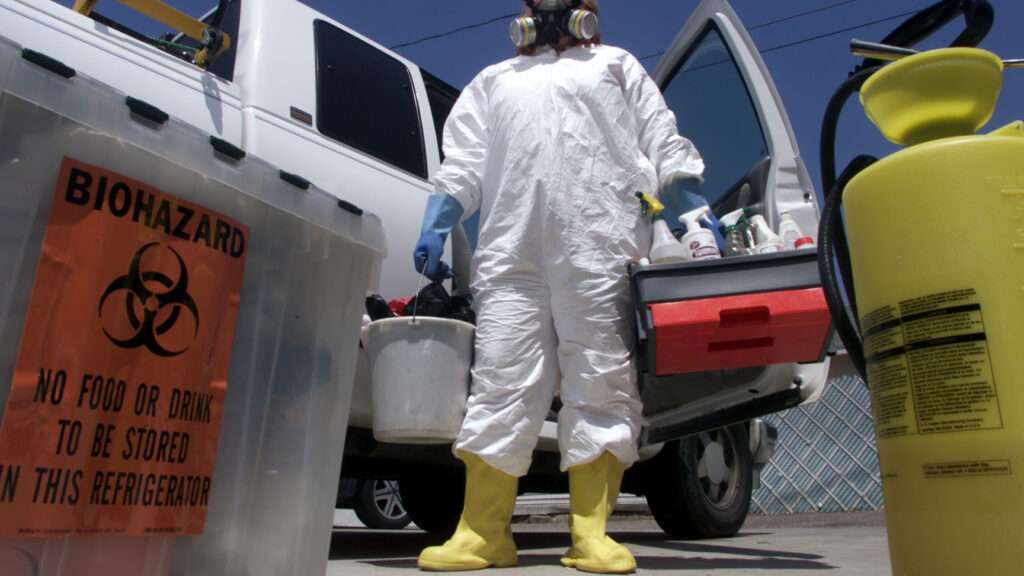
A crime scene cleaner, also called a biohazard remediation technician or trauma scene cleaner, works in homes, businesses, vehicles, and other real-world locations after something traumatic has happened. That might be an unattended death, a suicide, a homicide, an industrial accident, or a hoarding situation with contamination.
The work includes removing blood, bodily fluids, and tissue, taking out materials that have absorbed contamination, disinfecting every affected surface, treating odor, and disposing of biohazardous waste under local, state, and federal rules. Every scene is different. A technician might be working in a small apartment one day and a multi-room house with hidden damage the next.
On top of the technical side, there is a human one. Our technicians often meet families on the worst day of their lives. They need to be discreet, patient, and steady, because the people they serve are grieving.
Typical training for crime scene cleaning
Crime scene cleaning is a specialized field, and the training reflects it. Our technicians are OSHA bloodborne pathogen certified, which covers how to protect themselves and others from exposure to hepatitis B, hepatitis C, HIV, and other pathogens. Our firm is IICRC certified, which sets a national standard in cleaning and restoration. We are also EPA registered for the disinfectants we use, and we are members of the American Bio Recovery Association, which holds members to a code of ethics.
In California, trauma scene cleanup is regulated, and Sterile Pros is registered with the California Department of Public Health’s Trauma Scene Practitioners List. Other states handle this differently, which is one more reason experience matters.
The Biggest Differences at a Glance
Here is how the two roles compare in plain terms:
- Workplace: Sterile processing technicians work in controlled healthcare settings. Crime scene cleaners work in homes, businesses, and other unpredictable locations.
- Purpose: Sterile processing prepares medical instruments for safe reuse. Crime scene cleaning removes biohazards and restores a property to a safe, livable condition.
- Materials: Sterile processing deals with surgical tools and medical equipment. Crime scene cleaning deals with blood, bodily fluids, decomposition, contaminated flooring, furniture, and structural materials.
- Waste: Crime scene cleaners handle and transport biohazardous waste to approved disposal sites. That is a regulated process with its own rules.
- Emotional demands: Crime scene cleaners work directly with families in crisis and in spaces where something tragic happened.
Both jobs protect health, and both deserve respect. They just solve different problems.
Why the Right Training Matters in a Home Cleanup
If you are dealing with a death or trauma in your home, it can be tempting to ask a general cleaner, a restoration company, or even a medical professional you know for help. We understand that. But the stakes are higher than they look.
Bloodborne pathogens can survive on surfaces and in porous materials long after something looks clean. Fluids can soak into subfloors, drywall, and carpet padding. Odor can hide inside materials and return weeks later. Without the right training and equipment, a cleanup can leave the home looking fine while the contamination is still there.
We once worked a home where the family had tried to handle the cleanup on their own after a loved one passed. They scrubbed the visible area and thought the job was done. When our team arrived, we found fluids had reached the subfloor, and a lingering odor was already spreading to other rooms. We removed the affected materials, treated the space, tested the surfaces, and provided written documentation when it was complete. The family later told us they wished they had called sooner, because the delay made the job larger and harder on them emotionally.
That experience is more common than people realize, and it is why we encourage families not to take it on themselves.
Who You Should Call, and What to Expect
If the problem is a medical instrument in a hospital, that is a sterile processing department. If it is blood, a death, or a traumatic event at your home or business, that is a crime scene cleaner or biohazard remediation company.
When you call us, a live local technician answers 24 hours a day. Most teams arrive within 2 to 4 hours. We assess the space, give you a free on-site estimate before any work begins, and handle the cleanup, disposal, odor treatment, and documentation. We can also coordinate with law enforcement, property managers, and your insurance carrier. We bill insurance directly for most clients, which means many families pay little or nothing out of pocket.
When we finish, we test the surfaces and provide written documentation confirming the property meets health and safety standards. That gives you something reliable to point to, whether you are moving back in, reopening a business, or working with an adjuster.
Questions worth asking any company
Before you hire anyone for biohazard cleanup, ask these questions:
- Are your technicians certified in OSHA bloodborne pathogen standards?
- Are you registered or licensed where required in my state?
- How do you handle and dispose of biohazardous waste?
- Will I receive written documentation when the job is complete?
- Can you work with my insurance company?
A good company will answer every one without hesitation.
Two Careers, One Shared Purpose
Sterile processing technicians and crime scene cleaners both work to keep people safe from invisible risks. The difference is where they work and what they are trained to handle. If you ever find yourself facing a scene no one should have to deal with, you do not need to understand every technical detail. You just need to call the right team.
Call our 24/7 hotline at (844) BIO-CREW, and a live local technician will tell you what to do next.