Finding out about an unattended death in a home you own, manage, or are responsible for is disorienting. The first thing to do is call 911 or your local non-emergency police line so the death can be officially documented, then reach out to a professional biohazard remediation company like SterilePros before anyone attempts to enter or clean the space. Those two calls, in that order, protect your health, your legal standing, and your peace of mind.
Who Needs to Be Notified First
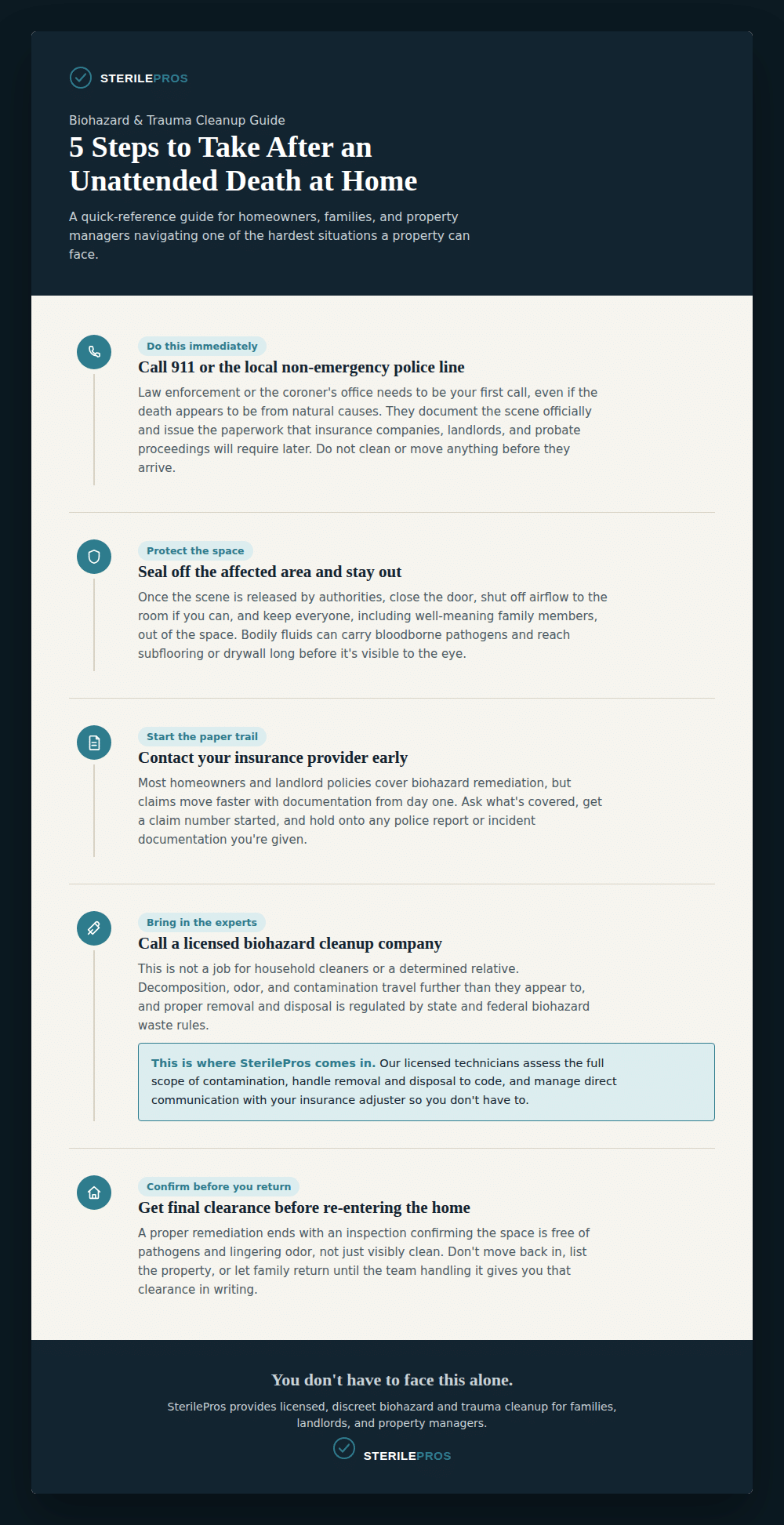
Law enforcement or the coroner’s office has to be the first call in almost every case, even if the death was clearly from natural causes. They’ll determine whether an investigation is needed and issue the documentation that property owners, landlords, and insurance companies will ask for later. Once the scene has been released by authorities, that’s your signal to bring in a licensed cleanup crew rather than a family member with rubber gloves and good intentions.
What Actually Happens to a Home After an Unattended Death
People are often surprised by how much damage an unattended death can cause, especially when the person wasn’t found for several days.
Decomposition Moves Fast
Human decomposition begins within hours and accelerates depending on temperature, humidity, and how long the body went undiscovered. Bodily fluids can seep into subflooring, carpet padding, drywall, and even structural wood, carrying bloodborne pathogens like hepatitis and staph that pose a real health risk to anyone who touches the affected area.
The Odor Is Not Like Anything Else
Decomposition odor is one of the hardest smells to describe until you’ve experienced it, and it doesn’t respond to air fresheners, bleach, or open windows. It settles into porous materials and HVAC systems, which is why so many homeowners who try to handle it themselves end up calling a professional team weeks later, frustrated that the smell keeps coming back.
Steps to Take in the First 24 Hours
Once the scene has been released, here’s what we tell every client to do before anyone else steps foot inside:
- Do not enter the room or attempt to clean anything, even if it looks manageable
- Keep the area sealed off, including closing doors and shutting off airflow if possible
- Contact your insurance provider to start the claims process early
- Call a licensed biohazard remediation company for an assessment
- Avoid throwing away any items until the cleanup team has evaluated what’s salvageable versus what needs to be treated as biohazard waste
Why DIY Cleanup Is a Bigger Risk Than It Looks
We’ve walked into homes where a well-meaning family member scrubbed the surface clean, only for us to find that fluids had already traveled beneath the flooring and into the subfloor joists. Surface cleaning doesn’t neutralize pathogens, and standard household cleaners aren’t designed for this kind of contamination. There’s also a legal side to this that people don’t think about: in many states, unattended death cleanup falls under regulated biohazard waste handling, meaning improper disposal can create liability for the property owner.
What Professional Biohazard Cleanup Actually Involves
Assessment and Containment
Our technicians start by inspecting the full extent of contamination, not just what’s visible. That means checking subflooring, wall cavities, and ventilation to map out exactly how far fluids or odor have traveled before any work begins.
Removal and Disposal
Contaminated materials, whether that’s carpet, drywall, or personal belongings that can’t be salvaged, get removed and disposed of according to state and federal biohazard waste regulations. This step alone is why licensing matters. Unlicensed cleaners often skip proper disposal entirely, which can come back on the homeowner.
Deep Cleaning and Odor Neutralization
This is where hospital-grade disinfectants, enzymatic treatments, and industrial ozone or hydroxyl generators come in. Odor neutralization isn’t about masking a smell, it’s about breaking down the organic compounds causing it at a molecular level.
Final Clearance
A thorough job ends with a final inspection to confirm the space is safe for re-entry, free of pathogens, and free of lingering odor. We don’t consider a job finished until it passes that standard, not just until it looks clean.
Working With Insurance and Property Managers
Most homeowners insurance and landlord policies cover biohazard remediation, but the claims process moves faster when documentation is thorough from the start. We provide detailed reports, photos, and itemized invoices for every project specifically because insurance adjusters need that paper trail. If you’re a property manager dealing with this for the first time, loop in your insurance carrier as early as possible so there’s no gap between discovery and cleanup.
Taking Care of Yourself Through the Process
It’s easy to focus entirely on logistics and forget that this is also a grieving process. Families dealing with an unattended death are often managing funeral arrangements, estate matters, and their own shock at the same time as coordinating cleanup. Letting a professional team handle the physical remediation frees up emotional bandwidth for the things that actually need a family’s attention right now.
What Years of These Cleanups Have Taught Our Team
We’ve handled cases ranging from a single-room contamination discovered within a day to full-property remediation after a death went unnoticed for over a week in the summer heat. One thing holds true across nearly every job: the properties that recover fastest and see the least long-term damage are the ones where the family called for professional help immediately instead of waiting or attempting cleanup themselves. Speed matters almost as much as technique when biological material is involved.
How to Choose a Biohazard Cleanup Company You Can Trust
Look for a company that’s licensed for biohazard and bloodborne pathogen remediation, carries proper insurance, and is upfront about their process from the first phone call. At SterilePros, we walk every client through what to expect before we start, handle direct communication with insurance when needed, and treat every property with the same discretion we’d want for our own family’s home. If you’re facing this situation right now, reach out to our team. You don’t have to figure this out alone, and you shouldn’t have to face it without support.